
$9 Tubes. $40 Powders. Two Adjustments. A Denture Technician Explains Why the Sore Spot Under Your Plate Kept Coming Back
If your lower plate has a raw spot, I already know what's in your bathroom drawer.
Three tubes of extra-hold cream in different stages of squeezed. A shaker of powder. A box of cushion strips you cut to size with nail scissors. Maybe a sample of the paste the front desk handed you after the last adjustment.
And somewhere in a purse or a glovebox, the backup tube, the one for restaurants.
I know because I've spent 25 years making and relining plates in a dental lab. And the single most common thing wearers say when their plate lands on my bench is this:
"I feel like I've tried everything."
They haven't tried everything. They've tried the same kind of thing, over and over. And every single one of those products misses the real reason the sore spot under the plate keeps coming back.
It has nothing to do with the brand of cream, the pattern on the box, or how hard you pressed. It has to do with a space, and why nothing in that drawer can fill it.
What "Trying Everything" Actually Costs
I asked wearers who came in for a second adjustment this year to add up what they had spent on hold before they sat down. The average was more than the reline they were avoiding:
- Extra-Hold Cream (a dozen tubes a year) $70–$110
- Adhesive Powder (3–4 shakers) $25–$45
- Cushion Strips & Wafers $20–$40
- The Wedding Stack (cream over powder) $15–$25
- Backup Tubes (car, purse, office) $18–$36
- Adjustment Visits & Copays $100–$400+
I call it the "Denture Drawer." Every long-time wearer has one. And every product in that drawer shares the same fatal flaw.
The pattern is always the same: Buy a tube. Feel hopeful. Use it for a week. Notice the plate still walks by lunch and the patch is raw by dinner. Shove it in the drawer. Repeat.
The Ridge That Can't Hold Still
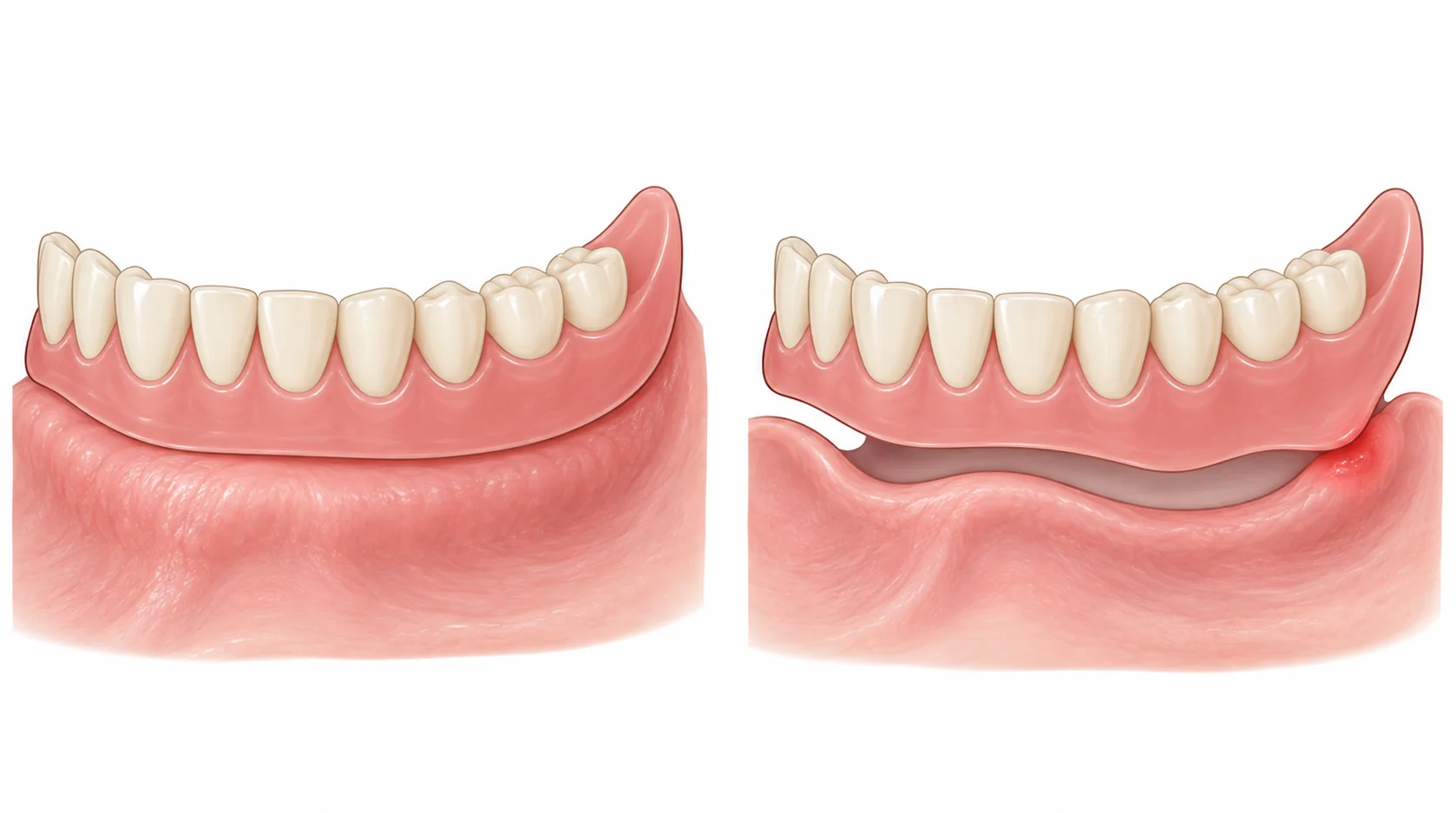
To understand why nothing in your drawer worked, you need to understand one thing about the gum under your plate that most people, and most products, completely overlook:
The bone that held your teeth starts shrinking the year they come out, and it keeps shrinking.
It's not like a broken arm. A bone that breaks heals back to its shape. The ridge under a denture does the opposite. With no tooth roots to hold it, the body slowly takes it away, a little every year.
Your plate is different. It was made hard, to the exact shape of the ridge you had on the day it was fitted. When the ridge recedes underneath it, the plate wants to sit where it used to. But there is nothing there to sit on. A space opens.
This is why:
- The sore spot is a rubbing spot because the plate is rocking on the two high spots that still touch, and the rocking is what saws into the gum
- The patch comes back after every adjustment because every adjustment grinds the plate to fit the ridge you have today, and the ridge keeps moving
- Cream alone can't fix it because cream dissolves in saliva and washes out by lunch. Then the plate walks, and every layer you press in at noon seats it a little wrong, so by evening the patch is raw. Cream does not fill a space. It washes out of one.
- Technicians call it a rocking plate meaning the gum is not just sore, it is being rubbed in the same place every day by a plate that has nowhere solid to rest
This is the real root cause. The brand, the pattern, and how hard you pressed never mattered. The problem is a plate made for a ridge that has since left, rocking on air.
What that means: Your plate is in a losing race, made for a ridge that keeps receding under it. Until you fill the space, nothing in your drawer will stop the rubbing.
Why Every Product in Your Drawer Failed You
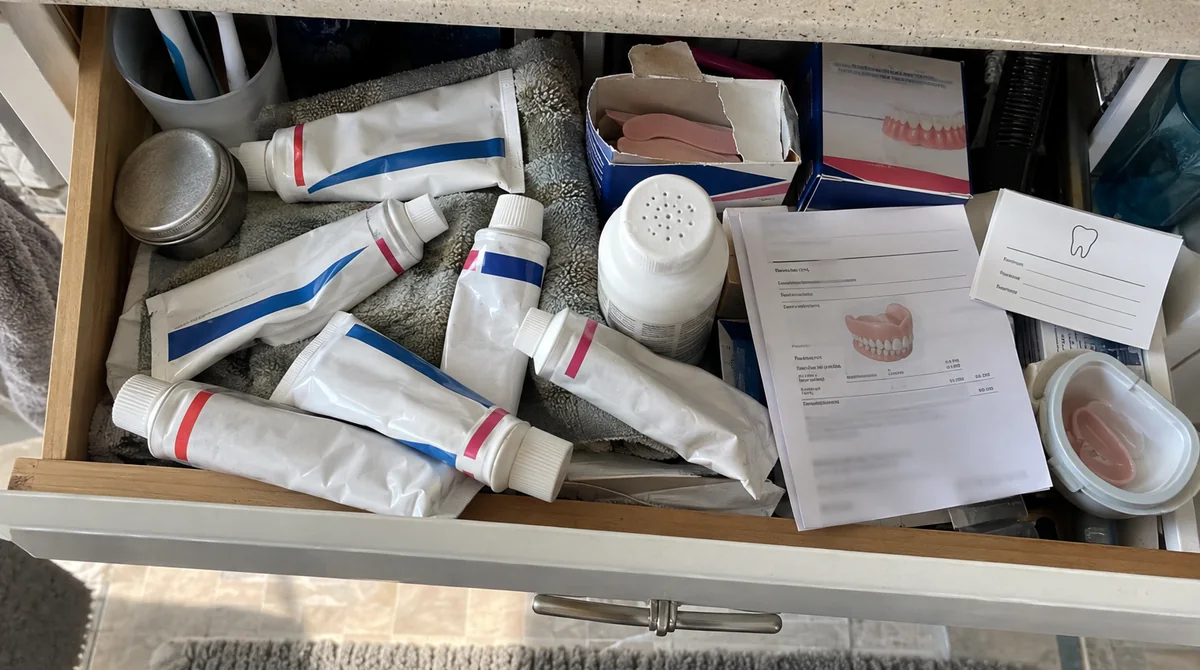
Now test each product against the one question that actually matters: Does it fill the space between the plate and the gum?
- Extra-Hold Cream: It sticks to a surface. A space has no surface. It swells into the gap, saliva thins it, and the first hot cup washes it out. By lunch the plate is walking, and the noon re-glue seats it wrong against the gum. "Adhesives make gums raw," as one wearer put it. She was describing the noon re-glue.
- Powder: It holds by absorbing moisture. Anything hot or wet undoes it. One wearer wrote "after an hr or so it is all gone." No mess, no goo, and nothing under the plate by ten in the morning.
- Strips & Wafers: They are a layer, and a layer is not a seal. A flat pad cannot follow the curves of a ridge, so the plate still rocks on the high spots, with a cushion under one side. They slide, and food works under the edge by late morning.
- The Adjustment: It fixes the fit for a month by grinding the plate to today's ridge. Then the ridge keeps moving, the cream fails the same week, and the front desk books you again. "Loose again after two hard relines," one wearer wrote. "Who in the world can afford to pay $1000 for relines all the time?"
- The Wedding Stack: Cream over powder is two layers that both dissolve, so it holds an hour longer and takes twenty minutes to scrape off that night. If that stack is in your drawer right now, you already know how that experiment ends.
Do you see the pattern? Every product in your drawer either glues, cushions, or grinds. Not a single one fills the space. They all work around the space. None of them fill it.
This is why you feel stuck: You tried hard enough. Every product in your drawer was designed to stick, dust, or pad, while the real problem is a plate rocking on a space that has been growing for years.
Why It Gets Worse by Dinner
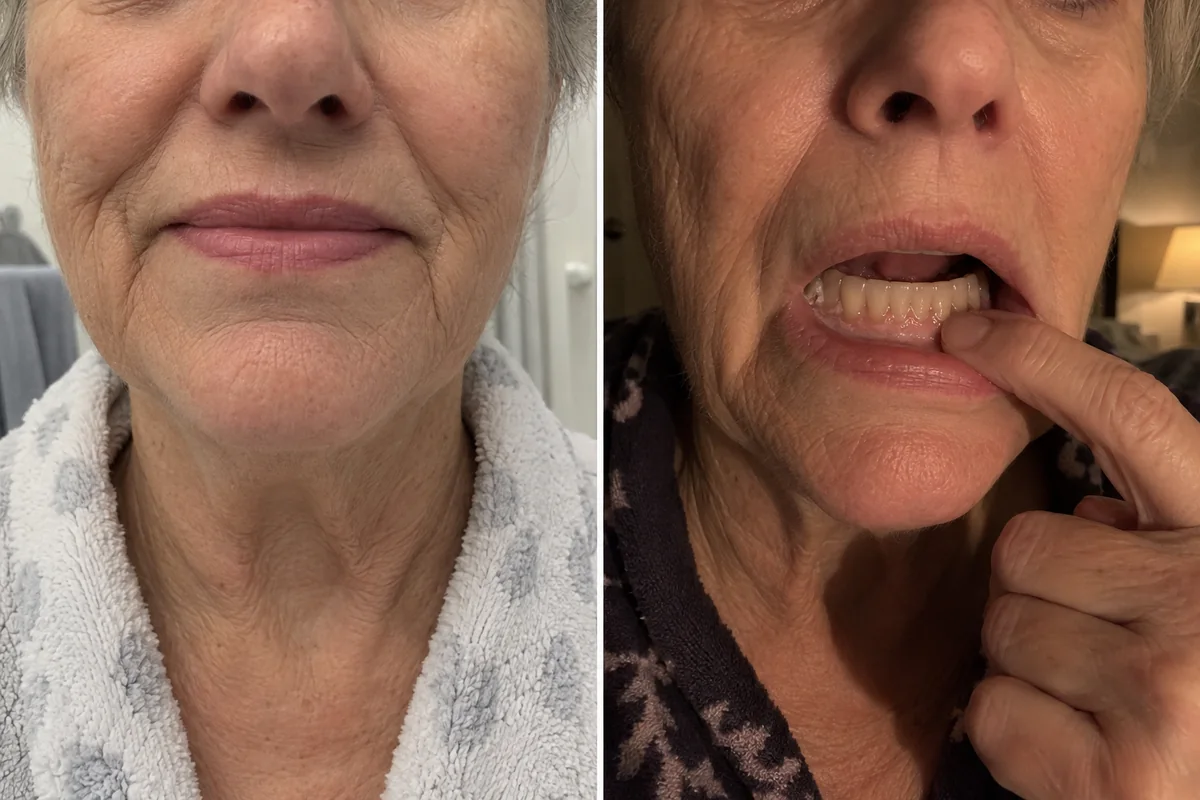
The cruel part of a rocking plate: the standard advice is to reapply, but every reapplication seats the plate a little more wrong.
In the morning, when the cream is fresh, the plate sits close to where it should. It's not a fit, but it's something of a seat. The gum takes the load across the whole ridge.
But by lunch the cream has thinned and the plate has walked. You press in another layer over the old one. Now the plate sits on cream that is half gone on one side and fresh on the other. It tilts. The tilt puts the plate's edge on one spot of gum, and that spot takes every bite.
This is why the patch is worst at dinner. It's not just that the plate is loose by then. It's that the plate has been rocking on one spot for six hours. Every bite since noon landed on the same square of gum. That spot goes to bed raw and starts the next day already tender.
The gap no product in your drawer fills: The gum needs the plate to stay put most in the evening, when it has taken the whole day's bites, but that's exactly when the cream has walked the furthest. Powder can't help at six. A strip can't help at six. Nothing in your drawer holds still at the hour the gum needs it most.
One Gel That Fills the Whole Drawer's Job

This is why I now tell wearers with a rocking lower plate about Vanoir Gel.
Vanoir Gel is a soft thermoplastic reliner you do at home, in a tube, for the days between visits. It does the one thing nothing in your drawer does: it fills the space between the plate and the gum, sets to the shape of your ridge, and stays put through the whole day, including dinner.
It does this the way a lab does it, with a material that fills the space instead of sticking across it, and it does it in one seating, which is why the plate stops rocking. Four things happen at once:
Warms and Flows
Warm the tube in a cup of hot water and the gel flows into the space the gums left, all the way to the edges of the plate
Sets to Your Ridge
Seat the plate once and it sets over a few hours to the exact shape of the ridge you have today, so the plate rests on the whole gum instead of two high spots
A Soft Cushion
The set gel stays soft, a cushion between plate and gum. It is not glue and it is not a hard reline. A plate that stays put stops rubbing
Out Every Night
The plate comes out at night and soaks in lukewarm water. The gel stays on the plate, and the hold is still there at breakfast. Redo it once a week
The gel fills the space. The set holds the shape. The cushion takes the bite. None of the products in your drawer do any of those three things. One wearer put it better than I ever have: "it feels just like a cushion between my gums and denture. Almost zero movement on my lower denture."
Your Denture Drawer
- Extra-hold cream: sticks, then washes out by lunch
- Powder: thin hold, gone at the first hot sip
- Strips: a layer under the rocking, never a seal
- The wedding stack: two layers to scrape off at night
- The adjustment: fits today's ridge, fails next month
- None hold still at dinner, when the gum needs it
What Vanoir Gel Does Differently
- Fills the space the gums left
- Sets to your ridge in one seating
- A soft cushion between plate and gum
- Comes out nightly, the gel stays on the plate
- Days of hold on one application
- Made for the days between dentist visits
- Holds still through dinner, the hour the gum needs it most
And here's the detail that matters most: Vanoir Gel is the only thing in the drawer that fills the space instead of sitting in it. This isn't a convenience feature. It's the entire point. The patch comes from a plate that walks all day. Fill the space, and the plate has nothing to walk on.
One pea-sized bead is the whole application. Almost everyone uses too much the first time, and too much is what squeezes out and feels bulky. Very flat lower ridge? You may still want a little powder for a long day out, but far less than before.
The After-Dinner Protocol
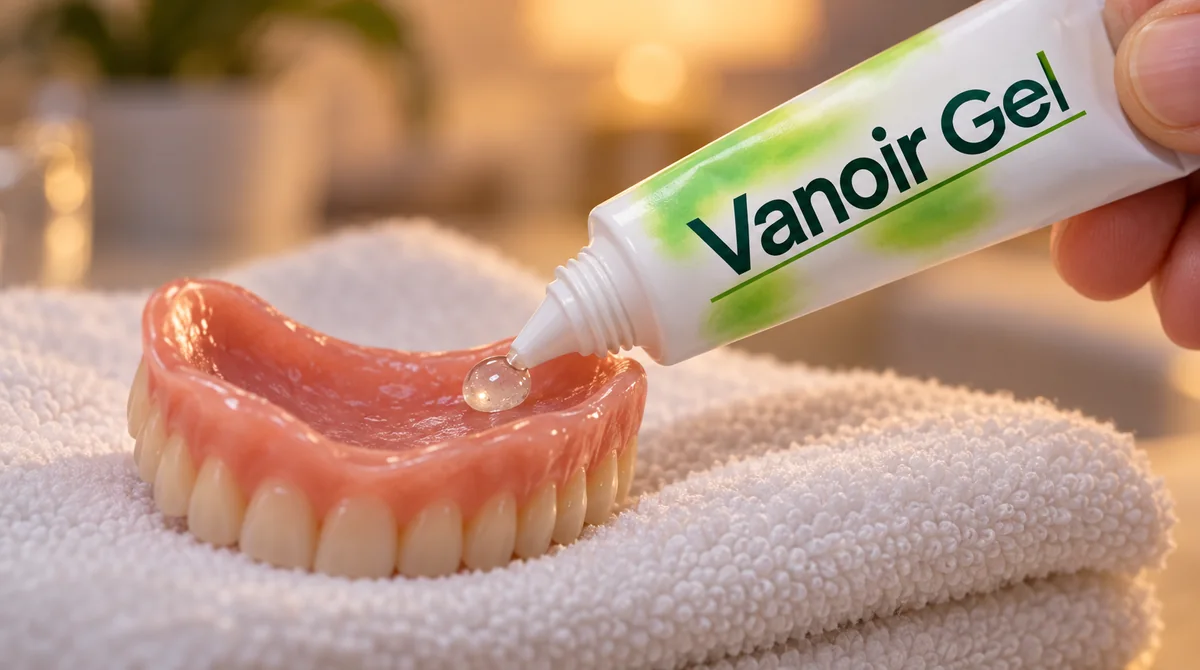
What I tell wearers: Warm the tube. Dry the plate. One pea-sized bead along the inside, seat the plate once, and bite gently. It tingles for a few seconds while it sets, then stops. Leave it in while the evening winds down.
Why after dinner specifically? Because the gel takes two to six hours to set, and it sets to the shape of the ridge it is sitting on. Seat it once, after the last meal, and it sets to your ridge through the evening. Breakfast is the first test.
Do not reapply at lunch. Do not press in more. The whole point is one seating that holds. For the first time, the plate rests on the whole ridge through the hours the gum used to take every bite.
Most wearers who follow this protocol say the rubbing stops within the first week, because the plate stops walking.*
No cream, powder, or strip can do this because none of them fill the space while you eat. Vanoir Gel is the only thing in the drawer that holds still at the exact hour the gum takes its bites.
Who Should Consider Vanoir Gel (And Who Shouldn't)
I don't recommend Vanoir Gel to everyone. Here's who it's specifically for:
- You've had a lower plate for more than a year and it floats, rocks, or walks by lunch
- You've tried extra-hold cream, powder, strips, or the stack, and they only held for an hour
- The raw spot under your plate is sore enough to change what you eat
- You've spent money on tubes that are now sitting in a drawer
- You've had one or two adjustments this year and the sore spot came back anyway
- Your upper drops with hot coffee, or your ridge is flat and nothing has ever held it
If that sounds like you, Vanoir Gel was made for exactly your situation. One note. The bead is smaller than you think. If it squeezed out the first night, you used too much. Try again with less.
Who should wait: If you had teeth pulled in the last few months and your gums are still healing, wait until your dentist clears you before using any reliner. And keep your next appointment: Vanoir Gel is a cushion between visits. It does not reline, fix, or heal anything. The adjustment is the dentist's job. The gel is the days in between.
Less Than What's Already in Your Drawer
This part surprises most wearers. One tube of Vanoir Gel replaces the cream, the powder, and the backup tube, and during this offer, four tubes cost less than one adjustment visit.
The tin tube sells out often. Once current stock is gone, the four-tube price goes with it.
| Package | Price | You Save |
|---|---|---|
| Vanoir Gel, Four Tubes Most Popular About $12.50 a tube, a month of weekly beads each |
$69.98 $49.99 | $19.99 |
That's less than the copay on the adjustment that didn't hold.
GET THE FOUR-TUBE PACK🔒 256-bit SSL Encryption
What to Do Right Now
Click Below
Tap the green button to visit the official Vanoir Gel product page.
Choose Your Pack
Most wearers take four tubes. Each tube is about a month of weekly beads, and the first one is your practice tube.
Put It On After Dinner Tonight
One pea-sized bead, seat it once, let it set overnight. Breakfast is the first test. Most wearers feel the plate stop walking within the first week.*
What People With a Sore Lower Plate Are Saying
★★★★★Wearer comments, gathered from public forums and reviews




The Space Is Still There. The Drawer Can't Fill It.
Right now, the gum under your plate is taking every bite on one raw spot because the plate is rocking on air. The cream in your drawer can't fill it. The powder can't fill it. The strips, the stack, the adjustment: none of them fill the space that has been growing under the plate for years.
Vanoir Gel is the only thing in the drawer that fills the space, with a soft thermoplastic that flows into the gap, sets to your ridge in one seating, and cushions the plate through dinner, while the plate stays put.
You've spent enough on products that work around the space.
Give your plate something solid to rest on.
Your gum has waited long enough.
References
- Atwood DA. "Reduction of residual ridges: a major oral disease entity." Journal of Prosthetic Dentistry, 1971
- Tallgren A. "The continuing reduction of the residual alveolar ridges in complete denture wearers: a mixed-longitudinal study covering 25 years." Journal of Prosthetic Dentistry, 1972. The ridge under a lower plate keeps receding for decades after the teeth come out
- American College of Prosthodontists: "Denture Care and Maintenance"
- American Dental Association, MouthHealthy: "Dentures"
- Cleveland Clinic: "Dentures"
- Kimoto S, et al. "Randomized controlled clinical trial for verifying the effect of silicone-based resilient denture liner on the masticatory function of complete denture wearers." International Journal of Prosthodontics, 2006